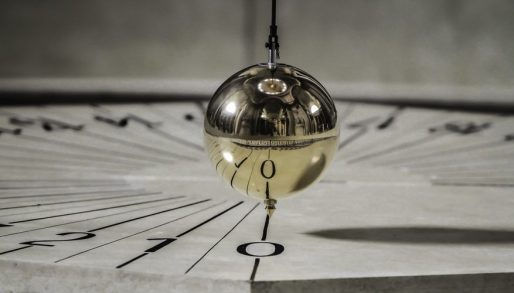
“Beware of faking: people will believe you. People believe those who sell lotions that make lost hair grow back. They sense instinctively that the salesman is putting together truths that don’t go together, that he’s not being logical, that he’s not speaking in good faith. But they’ve been told that God is mysterious, unfathomable, so to them incoherence is the closest thing to God. The farfetched is the closest thing to a miracle.” – Lia speaking to Casaubon: Foucault’s Pendulum
This powerful quote for years has always cautioned me about the power of belief and its consequences, both positive and negative.
We are ignorant to the power of beliefs and that ignorance is exponentially increased when it applies to our own beliefs and their power over us every day. A significant number of people in the west have casual religious beliefs we find comforting but not binding, nurturing yet not dogmatic. We tend to think that we are released from the dogma of the past because we are enlightened and therefore free from such bronze-age thinking. But when a religious belief wanes a political or secular belief takes rise. But beliefs in themselves are not bad. To the contrary, they are a core function of the success and overall survival of our species. Yuval Noah Hirari’s Sapiens is a fantastic read on the subject.
Narratives of where we come from or of our destiny have shaped societies while crushing others. A sense of duty can hold the line, while a sense of shame can break it. Beliefs brought down the towers on 9/11.
Today we have leaders who court conspiracies for their personal gains all along thinking they can control the narrative and the peoples consuming them. But history has taught us that ideas are hard to contain. And like a virus they can spread and develop resistance to establish norms or counter ideas. Efforts to control them only drive their roots deeper into the collective consciousness of those who believe. And if the idea mutates into a state of sacredness it reaches an unquestioning status for its adherents.
In the quote above, the main protagonist’s girlfriend, Lia, is telling him to stop his game of playing with people’s beliefs. Casaubon and two other fellows concocted a plan to develop an all encompassing conspiracy theory that tied all conspiracy theories into one. They enjoyed watching the gullible adherents fall for the ploy. So real was their truth that when the plotters decided to call the game off and pull back on the joke, no one would believe them. To the contrary, the believers knew that Casaubon and his friends were holding out on them…and they would get the ultimate truth one way or the other.
Foucault’s Pendulum is in my top five favorite novels. It is not for the faint of heart as it can be dense. But having read it a few times I cant shake off the feeling that we are living in an age of conspiracy theory peddling that resembles a real-life version of this Eco’s classic.
 CYBERTONIA