A lot has been noted about the ever growing inequality between the super-rich and the poor. The most comprehensive piece written in recent history that quantified this phenomenon was Capital In The Twenty-First Century by Thomas Piketty. I recommend you read this piece regardless of your political convictions.
For years after reading Piketty I was left puzzled by the implications of his piece, Capital. But his solutions seemed more of the same; tax, tax, tax. There was no real substance behind said solutions nor was there any historical data in his work that would support his solution as the leveler for inequality. In comes Walter Scheidel with his work, The Great Leveler: Violence and the History of Inequality from the Stone Age to the Twenty-First Century.
In many ways The Great Leveler is a response to Piketty’s Capital in that it acknowledges  the real problem with inequality but in contextualizes the problem. Scheidel makes a compelling argument that inequality has always been with us and that there are only four forces that level inequality effectively:
Mass Mobilization Warfare
Transformative Revolution
State Failure
Lethal Pandemics
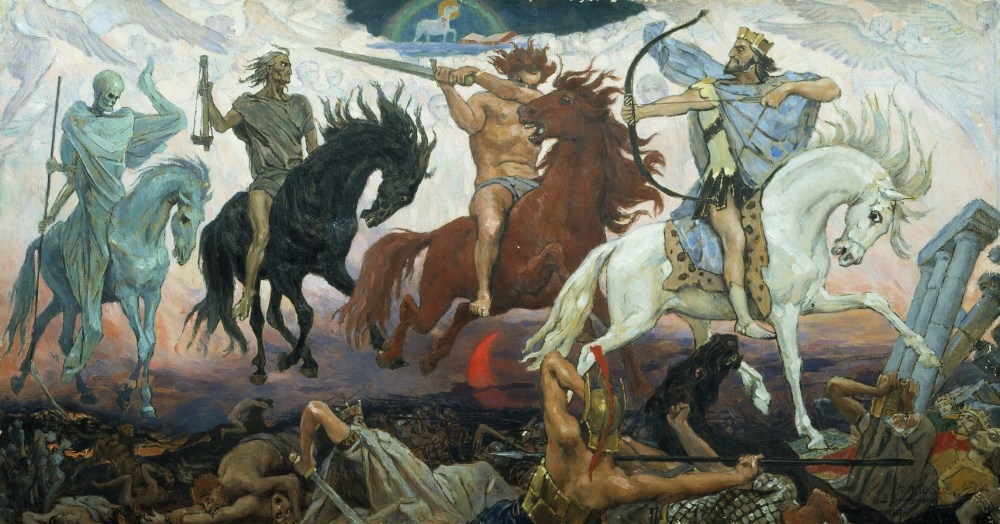
He refers to this forces as the Four Horsemen – Scheidel goes on to say:
Just like their biblical counterparts, they went forth to “take peace from the earth” and “kill with the swords, and with hunger, and with death, and with the beast of the earth.” Sometimes acting individually and sometimes in concert with one another, they produced outcomes that to contemporaries often seemed nothing short of apocalyptic. Hundreds of millions perished in their wake. And by the time the dust had settled, the gap between the haves and have-nots had shrunk, sometimes dramatically.
As with Capital, I highly recommend The Great Leveler, but you must read Capital first.
In an age where cries for a great leveling and redistribution of wealth is called for by the masses, it would be prudent to understand how such leveling has effectively happened in the past and what consequences it brought with it.
 CYBERTONIA