Book Recommendations 01

Photo by Oziel Gu00f3mez on Pexels.com

Book Recommendations

I am starting a series of book recommendations, hoping that some will find them helpful. I believe that a good mix of history, nonfiction, and fiction can lead to insights, inspiration, and “aha!” moments that would otherwise be lost in the noise of narrow-scoped hedgehog expertise.

History

  • The Square and the Tower: Networks, Power, and the Rise of Modern America by Niall Ferguson: In this book, Ferguson argues that networks have played a crucial role in shaping American history. He examines how networks of power have been used to build businesses, win elections, and start wars. Ferguson’s writing is clear and engaging, and he does a great job of explaining complex ideas in a way that is easy to understand.
  • Fracture: Life and Culture in the West, 1918-1938 by Benjamin Carter Hett: This is a brilliant book that provides a comprehensive overview of the events that shaped the 20th century. Hett examines the cultural, political, and scientific developments of the period, and he shows how they all interconnected to create the world we live in today. This book is essential reading for anyone who wants to understand the modern world. 

Nonfiction

  • The Three Marriages: Redefining Work, Life, and Love by David Whyte: This is a thought-provoking book that challenges our conventional notions of work-life balance. Whyte argues that we need to rethink the way we approach work, life, and love in order to find true fulfillment. His writing is wise and compassionate, and he offers practical advice on how to create a more meaningful and balanced life. 
  • How Innovation Works: And Why It Matters by Matt Ridley: This is a fascinating book that explores the nature of innovation and why it is so important for our society. Ridley shows how innovation is a complex and unpredictable process, but it is also essential for progress. He also discusses the challenges that we face in promoting innovation, and he offers some suggestions for how we can overcome them. 

Fiction

  • Trigger Warning: Short Fictions and Disturbances by Neil Gaiman: This collection of short stories showcases Gaiman’s mastery of a variety of genres, including horror, comedy, and fantasy. The stories are all well-written and engaging, and they will stay with you long after you finish reading them.

Note: Originally published as a LinkedIn article

OSR | Civilizations Operating System

Photo by Spencer Davis on Pexels.com

In Nail Ferguson’s 2012 book, Civilization: The West and the Rest, he tackles why the West succeeded, to the degree it has and has come to dominate the globe? After a detailed outline of how the European powers compared to those of the Ottoman and Chinese empires 500 years ago — not well. Ferguson goes on to detail how, through circumstances of violence, poor decisions, and empirical overreach, the well-established Chinese and Ottoman empires created the right conditions for the rise of Western Civilization and its 400 years of dominance. He describes 6 particular developments that separated the West from the rest, which in keeping with the times he describes as “Killer Apps.” (This will make more sense in a few). Here are Ferguson’s civilizations killer apps:

  • Competition
  • Science
  • Property Rights
  • Medicine
  • Consumer Society
  • Work Ethic

I’ve read reviews of this work dismissing its oversimplification on one end and its Western-centric position on the other. I think the former missed the point of the exercise while the latter likely didn’t read the text because Ferguson’s conclusions are far from flattering for where the West is heading.

I enjoyed his framing the social developments that gave rise to Western Civilization as Killer Apps. In doing so, Ferguson illustrates how these can and have been downloaded by the rising powers — China for one.

Ferguson spends a good deal on the colonial period and the horrors they incurred on native peoples and also highlighted some of the benefits that came out of said periods, particularly around medicine. 

Below is a TED Talk by Ferguson where is discusses his killer apps. He is a master presenter, and his summary of the apps is compelling and informative.

Ferguson does not shy away from the horrors delivered by Europeans as they marched and conquered the world. These horrors were critical in establishing and maintaining their dominance. But Ferguson did fail to identify an operating system for his apps. I would call it OSR, the operating system of ruthlessness. Without ruthlessness, empires cannot retain their hold for too long, and the rest of the killer apps would not have had an operating system on which to run.

My Take: Burning the Books

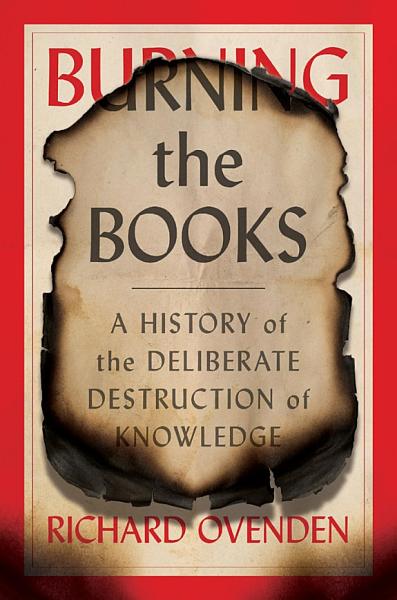
Burning the Books: A History of the Deliberate Destruction of Knowledge by Richard Ovenden does an excellent job at demystifying the stories behind the burning of the library of Alexandria. It makes a compelling argument that equally contributing to the demise of the legendary library was neglect and a deprioritization of knowledge in the society where the library was located.

Ovenden splits the book into two main areas of focus, libraries and archives. I found this interesting since I have never really given much thought to archives and their importance in preserving culture and histories. I did find that the author, after making a clear distinction between the two and noting that they are not mutually exclusive, then starts to use the terms interchangeably toward the last third of the book.

The chapters on the Yugoslavian war of the nineties and the destruction of Jewish libraries during World War II are insightful and a warning to all that take such events lightly. These chapters shed light on how burning libraries and archives is a deliberate tactic that often time precedes genocide.  

I found two problems with the book that irritated me:

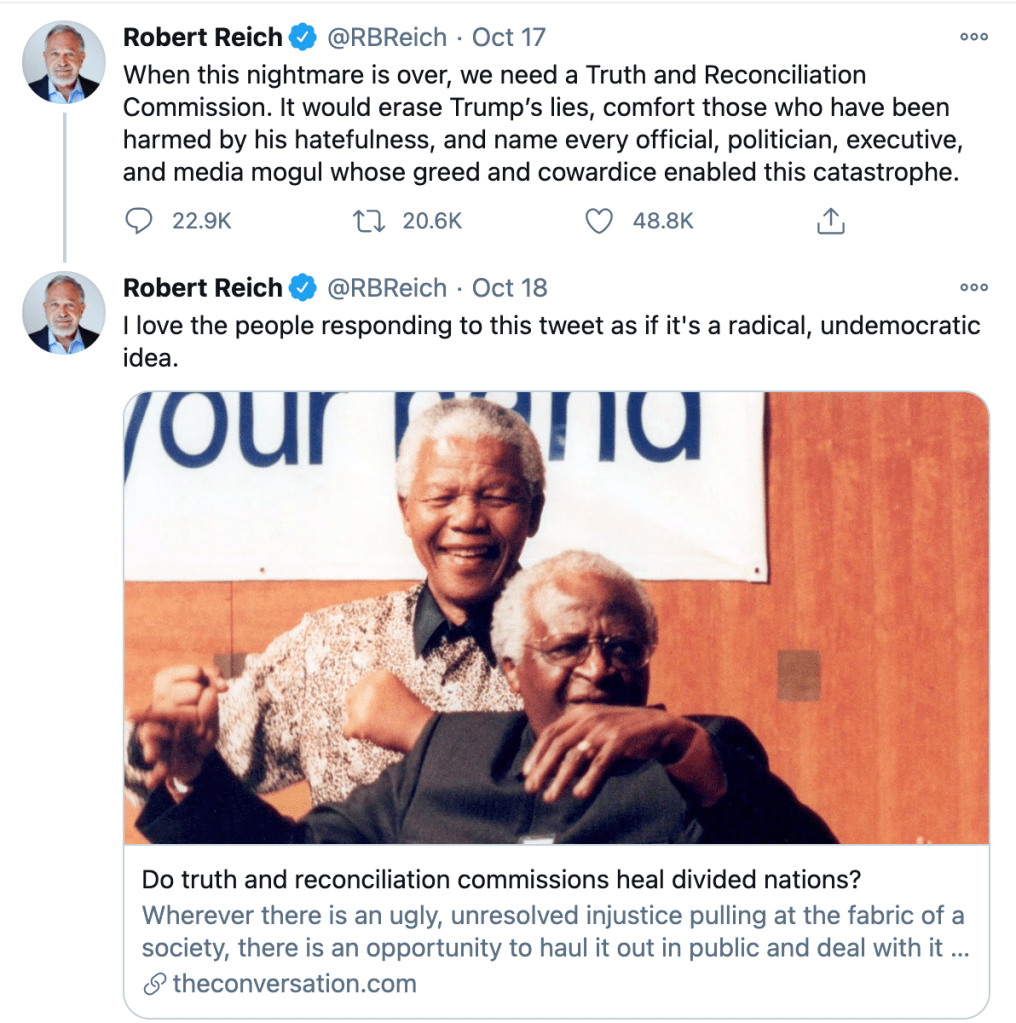
First, towards the end of the book, the author focuses on the importance and need to archive as much of the social media content as possible and frames this need as a duty for future generations. I am skeptical of this premise. I understand and can see the insights that such an initiative can provide to future generations on how we think and what our priorities may or may not have been. But I also find the idea of creating repositories of such large volumes of commentary rubbish dangerous. Social media platforms give everyone a voice, and an exceeding majority of people tend to regret a lot of what they say. Achieving such moments can be embarrassing and dangerous to people in the future. Just recently, former Labor Secretary Robert Reich called for making a list of Trump supporters so that the country can embark on a series of truth and reconciliation hearings. And while national archives can serve as powerful tools for justice, the other side of that blade can serve as an instrument for prosecution for past opinions or support. Ovenden does not even admit a negative side to such archiving, which I found troubling. Is this omittance naivety or deliberate ignorance on his part?

Second, Ovenden does a good job bringing to light how many Europes libraries, including the Bodleian Library at the University of Oxford, have items on their catalogs that were acquired due to war and pillage. And while he seems to denounce the practice, he stops short of calling for the return of such items to their sources of origin. I found it rather annoying that he would bring the matter up but not offer his opinion. The case of manuscripts, works of art, and treasures acquired through imperialism and colonialism is a pressing matter that will gain momentum as more countries industrialize and move out of poverty. If western institutions had to return said collections, their museums and net value would plummet overnight. And while many of these institutions refraining from stating that they can care for these artifacts better than the people from where they originate (it would not be the politically correct commentary), their silence on the matter of what to do makes it clear that their liberal thinking only goes so far. I think that technology holds the key to preserving copies of these artifacts and making them accessible to the world at large.

While I have noted two issues that bother me about Burning the Books, I still think the project is well written, and its author is an accomplished scholar. This book should be in any bibliophile’s collection.

Killing Ideas

Wherever they burn books, they will also, in the end, burn human beings.”

Heinrich Heine

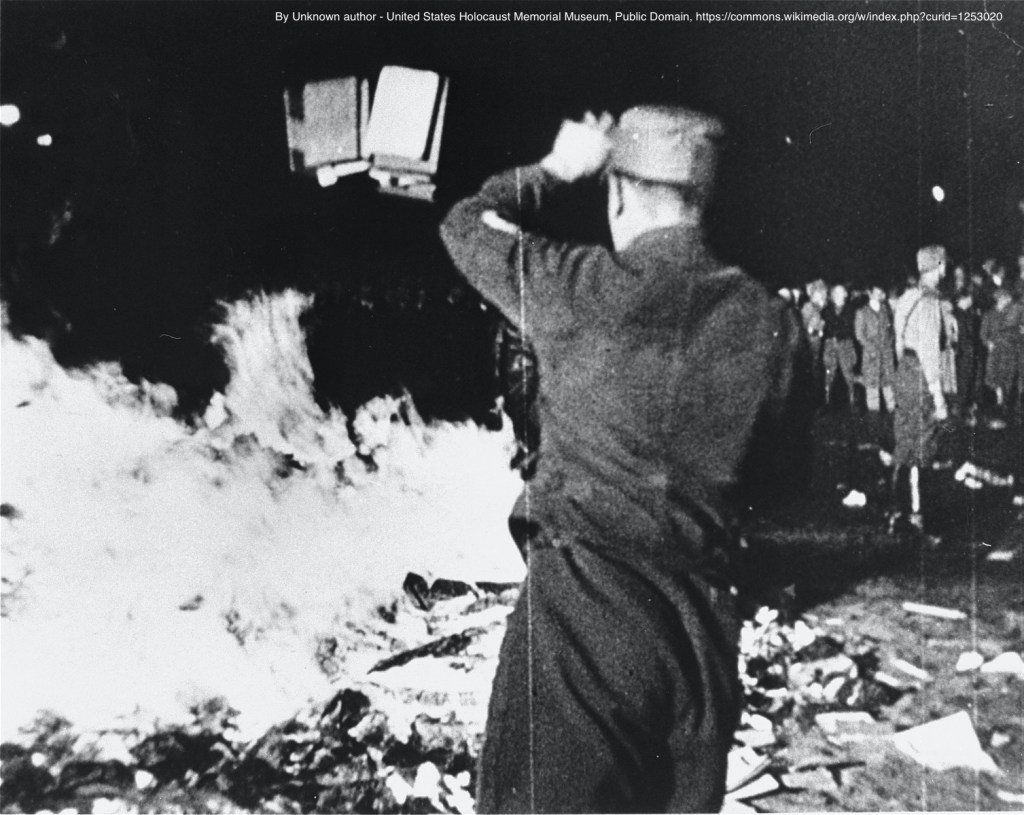
I still remember the confused and scared emotions when I first saw the images of books burning. It was an old World War II documentary back in the late 70s, early 80s. The date fails me, but I remember it was not long after my dad had died. My mother dealt with the depression of her husband’s loss with an addiction to valium.

By Unknown author – United States Holocaust Memorial Museum, Public Domain, https://commons.wikimedia.org/w/index.php?curid=1253020

Initially, books were a liberation for me from the fears and pains of the world I had been thrust into by my father’s unexpected death. I found refuge in the adventures of heroes like Conan the Barbarian, a loner who, through his brawn and smarts as a thief, made his way in an unforgiving, violent world. I also found wonder in sci-fi stories by Asimov and Clarke. I was moved by Shelly’s version of Frankenstein, which to my young minds surprise, was very different from the movies I had grown up watching. So it was with a sense of horror that I watched Nazis burning books on a pile. Why would anyone do such a thing?

Over the years, I learned that book burning was not a Nazi phenomenon but a weapon used by those seeking to control people’s minds. Ray Bradbury’s Fahrenheit 451 came into my life during my teens. It brought the whole subject into context, helping me frame lifelong values around all forms of censorship. Censorship is the first sign of tyranny, a signpost to sound the alarm.

When you burn books, you are attempting to exterminate ideas. And when you have no more books to burn, the only repository of ideas left are minds.

I find book-burning, for any reason, repulsive, and I consider it a crime against humanity. Humanity would be nothing without ideas. Our culture, our traditions, the very essence of what makes us humans comes from our thoughts. Books are mediums that document ideas, good or bad. And they serve as a testament to where we have been and where we can go. They help to inspire and to warn.

During the summer of 2013, while on a business trip to Berlin Germany, I found time to visit the site of the book burnings of 1933. There is a memorial there, a room with empty bookshelves. The moments I was there brought me full circle to that moment so many years ago when I was a kid.

By Charlotte Nordahl – originally posted to Flickr as Denkmal der Bücherverbrennung, CC BY-SA 2.0, https://commons.wikimedia.org/w/index.php?curid=4017071

Jackasses from every corner of the political spectrum will argue that banning books is for the good of this or that group. They will claim that it’s not all books, just the ones that “shouldn’t be.” Fear these people and do not trust their intentions; they are never good. Anyone that seeks to erase ideas will rewrite histories and have no restraint from erasing people.

The Writer And The General

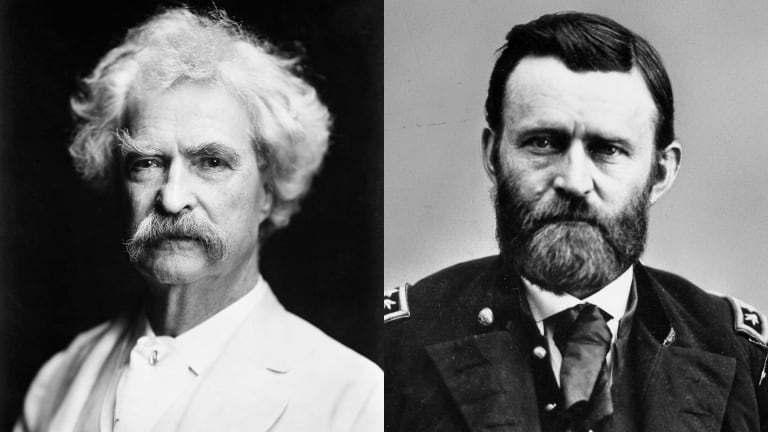
In his autobiography, Mark Twain elaborates on his relationship with General Ulysses Grant. Twain notes that the general enjoyed a high level of popularity and respect worldwide. After a trip to China, Twain explains that the political elites in that country admired and respected Grant.   

When a new, more conservative regime came into power in China, they recalled all of their citizens studying abroad back home.  Those in favor of continuing the foreign study program appealed to Grant for help.  Grant wrote a letter to the new leadership in China, and they, out of respect for him, reversed their decision (“Grant and the Chinese: note for 72.33–34,” in Autobiography of Mark Twain, Volume 1. 2010).

The friendship between Twain and Grant was strong, and Twain was not only fond of Grant but admired the man and his deeds as a Union leader during the Civil War. This fondness and admiration made the reality of Grant’s financial circumstances frustrating and troubling for Twain.

Twain recalls his suggestion that Grant document his experience during the Civil War in a series of memoirs. Grant resisted this idea out of modesty. He thought no one would want to read about his background and feared it would come off as boasting. This modesty annoyed Twain, who viewed the accounts as invaluable and a matter of national pride and a treasure for future generations. Twain argued that there was good money to be made by Grant, the former president pushed back that he was financially well off and had everything he needed.

A while later, Grant and his family found themselves broke due to a series of bad investments they made with a person they thought was a friend but was nothing more than a swindler. When Twain got the news that Grant was writing articles for a publication to help make ends meet, he immediately approached Grant and his son and revisited the idea of having Grant write his memoirs. Grant informed Twain he was ready to sign a contract with the publishers of his articles. Twain asked to read the agreement, and he found that Grant was severely getting underpaid. He provided Grant a market value proposal, and Grant signed with Twain’s publishing company.

Twain offered Grant $25k advance for each manuscript upon delivery. And the money was Grants even if they did not meet a minimum number of sold books. Grant refused because he found it unfair that he should get that money, and the publisher loses because of low sales.  

Twain goes on to say, “It was absolutely impossible for him [Grant] to entertain for a moment any proposition which might prosper him at the risk of any other man.”

The Autobiography of Mark Twain is a series of three books and is part of the Mark Twain Project.  It is an exhaustive work that can be consumed all at once or in bits and pieces.  It is an American treasure and holds some of the best American histories once can read.  From time to time, I will be posting brief summaries of those stories, and I urge you to go read them yourself.  I can do no justice to Twains exquisite writing. Trust me, you will be well rewarded for putting the time into reading about this great American hero.