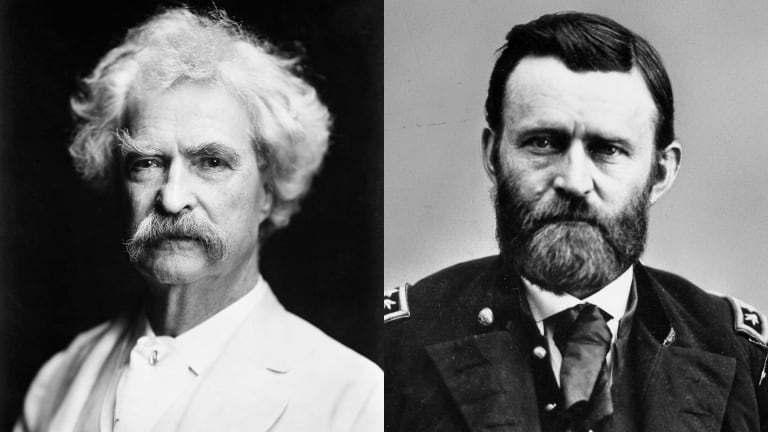
In his autobiography, Mark Twain elaborates on his relationship with General Ulysses Grant. Twain notes that the general enjoyed a high level of popularity and respect worldwide. After a trip to China, Twain explains that the political elites in that country admired and respected Grant.
When a new, more conservative regime came into power in China, they recalled all of their citizens studying abroad back home. Those in favor of continuing the foreign study program appealed to Grant for help. Grant wrote a letter to the new leadership in China, and they, out of respect for him, reversed their decision (“Grant and the Chinese: note for 72.33–34,” in Autobiography of Mark Twain, Volume 1. 2010).
The friendship between Twain and Grant was strong, and Twain was not only fond of Grant but admired the man and his deeds as a Union leader during the Civil War. This fondness and admiration made the reality of Grant’s financial circumstances frustrating and troubling for Twain.
Twain recalls his suggestion that Grant document his experience during the Civil War in a series of memoirs. Grant resisted this idea out of modesty. He thought no one would want to read about his background and feared it would come off as boasting. This modesty annoyed Twain, who viewed the accounts as invaluable and a matter of national pride and a treasure for future generations. Twain argued that there was good money to be made by Grant, the former president pushed back that he was financially well off and had everything he needed.
A while later, Grant and his family found themselves broke due to a series of bad investments they made with a person they thought was a friend but was nothing more than a swindler. When Twain got the news that Grant was writing articles for a publication to help make ends meet, he immediately approached Grant and his son and revisited the idea of having Grant write his memoirs. Grant informed Twain he was ready to sign a contract with the publishers of his articles. Twain asked to read the agreement, and he found that Grant was severely getting underpaid. He provided Grant a market value proposal, and Grant signed with Twain’s publishing company.
Twain offered Grant $25k advance for each manuscript upon delivery. And the money was Grants even if they did not meet a minimum number of sold books. Grant refused because he found it unfair that he should get that money, and the publisher loses because of low sales.
Twain goes on to say, “It was absolutely impossible for him [Grant] to entertain for a moment any proposition which might prosper him at the risk of any other man.”
The Autobiography of Mark Twain is a series of three books and is part of the Mark Twain Project. It is an exhaustive work that can be consumed all at once or in bits and pieces. It is an American treasure and holds some of the best American histories once can read. From time to time, I will be posting brief summaries of those stories, and I urge you to go read them yourself. I can do no justice to Twains exquisite writing. Trust me, you will be well rewarded for putting the time into reading about this great American hero.
 CYBERTONIA