AWS Inks Deal With Australian Intel, Microsoft Security Breaches Hit Texas State Agencies

A recent Bloomberg article, noted that Russian hackers breached Microsoft’s security again, gaining access to customer emails. The hackers, identified as Midnight Blizzard (also known as APT29 or Cozy Bear), are linked to Russian foreign intelligence. This breach targeted communications between corporate executives and their customers, adding to a growing list of security failures for Microsoft.

The lack of prominent media coverage on these issues is troubling. This latest article was buried deep in Bloomberg’s website, with similar stories also hidden in the Wall Street Journal, New York Times, and Financial Times. It’s alarming how little attention these significant breaches receive, especially considering how many American businesses rely on Microsoft services.

Midnight Blizzard was also responsible for the notorious SolarWinds breach in 2021, an incident that was never fully explained. Microsoft’s continued security lapses are not just isolated incidents but part of a worrying trend. The company’s security culture has been criticized as inadequate, raising serious concerns about the safety of our communications and data.

Adding to this concern, another Bloomberg article disclosed that several Texas state agencies were compromised in the same hack. Agencies like the Texas Department of Transportation and the Texas Workforce Commission had their emails exposed. And while most of the details remain unclear, since emails were exposed, it suggests the breaches involved Office 365. The lack of transparency from Microsoft about whether the security failings were on their end or the customers’ side only adds to the frustration.

Microsoft’s repeated security issues should be a wake-up call. As we rely heavily on their services, the need for robust security measures and transparency is more critical than ever. If our emails and communications aren’t safe, what else is at risk? With the interconnectivity of Office 365 and Azure, particularly through services like Active Directory, everything on their platform is interconnected. This makes transparency on security breaches even more critical.

In other news, Amazon is building a series of high-security data centers for Australia’s defense and intelligence community in a $1.3 billion deal over the next decade. This follows a similar $5.3 billion deal with New Zealand in 2021. Given the strong alliances between these countries and the US, these deals likely aim to create a robust international intelligence-sharing network.

The Metaverse, Anonymity, and Our Digital Lives

I came across two fascinating articles that got me thinking about the future of technology and its impact on society. The first, from the Financial Times, was titled “Meetings in the Metaverse: New Tech Draws Workers to Virtual Offices.” It reminded me of how, during the COVID pandemic, the metaverse seemed poised to revolutionize our lives. Yet, this vision hasn’t quite materialized. The high cost of headgear, like Apple’s $3,500 AR/VR headset, and the general dislike of wearing these devices for prolonged periods of time, has caused interest to wane. Even Meta’s Oculus hasn’t gained the traction expected. But now, there’s a new wave of interest as the metaverse intersects with advancements in generative AI. I foresee in the coming year a convergence of blockchain, the metaverse, and AI— the three most recent tech hypes, giving rise to innovative and ground breaking use cases and applications.

The second article, from the Wall Street Journal, titled “An Anonymous Messaging App Upended This High School,” discussed an app called Fizz. Fizz is a social media platform that banks on total anonymity. Initially, it was just students sharing jokes and memes, but it quickly devolved into a platform for bullying, hateful comments, and false accusations against teachers. It became so toxic that the school had to intervene and get the company to remove them from their list. Fizz works by requiring a school email, supposedly to keep out non-school actors, but this setup only exacerbated the issues.

These articles led me to reflect on the concept of anonymity on the internet. I used to think it was a great feature—after all, online, no one knows if you’re a dog or a human. But now, I’m struggling to see its value, especially in a free society. Anonymity seems to absolve people of accountability and brings out the worst in us all.

After reading the Wall Street Journal article, I’ve realized that the role of anonymity in a free society needs serious reconsideration. While some argue it protects whistleblowers, we already have laws for that. Anonymity doesn’t shield whistleblowers from anonymous online attackers who ruin their reputations. Instead, anonymity undermines our institutions and social contract. This is a complex issue that deserves more thought and discussion.

As we navigate the evolving landscape of technology, we must critically evaluate the implications of anonymity online. It’s a topic that impacts our digital interactions and the fabric of our society. We need to find a balance that protects individuals without enabling the negative behaviors anonymity often brings out.

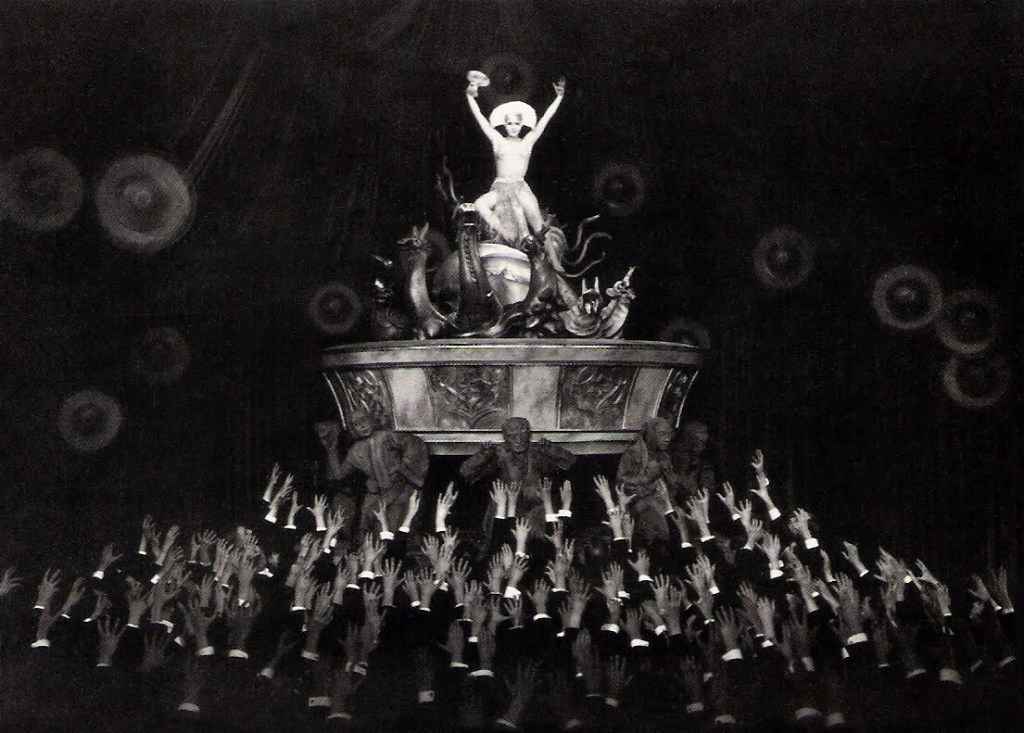
Moral Decadence: Lessons from 1920s Berlin

A recent post on X sparked a thought-provoking discussion: Did the depravity and hedonism of 1920s Berlin pave the way for the rise of the Nazi movement in Germany? While it’s impossible to attribute such a complex historical event to a single cause, my history study suggests that extreme moral decadence often leads to societal “over-corrections.”

When a society indulges excessively in hedonism, sexual depravity, and exploitation, it begins to destabilize. This instability opens the door for necessary corrections. Societies, like all complex systems, strive for equilibrium. If they fail to self-correct through the leadership of cultural and political figures, they will inevitably do so through conflicts and upheavals.

Certain moral principles are universally valued across societies: honesty and truthfulness, integrity, respect for human dignity, compassion and concern for others’ well-being, fairness and justice, and responsibility and accountability for one’s actions. A common thread among these principles is self-control. Without self-control, societies descend into chaos.

Berlin in the 1920s serves as a stark example. The city’s descent into debauchery and depravity was shocking. Even when consensual, many acts violated these fundamental principles.

Prostitution and other sexual fetishes, even when practiced by consenting adults, can pose serious threats to society, culture, and the individuals involved. These practices can lead to exploitation, abuse, and trauma and exacerbate pre-existing mental health issues. Participation in such activities can result in addiction, unhealthy coping mechanisms, social stigmatization, difficulty forming healthy relationships, and the destruction of the family unit.

While consenting adults have the right to engage in sexual practices of their choice, we must consider the potential psychological, emotional, and societal consequences, especially for vulnerable individuals with mental health issues.

Ultimately, self-control and adherence to moral principles are paramount for the stability and success of any society. Without them, we risk repeating past mistakes, inviting turmoil into our lives, and destroying our societies.

“Trust In Science” Betrayed: The Conflict of Interest Eroding Scientific Institutions

The New York Post reported today that the National Institutes of Health (NIH) and its scientists collected a staggering $710 million in royalties during the pandemic from late 2021 through 2023. These payments were made by private companies, primarily pharmaceuticals, to license medical innovations from government scientists. Astonishingly, $690 million of that amount went to the National Institute of Allergy and Infectious Disease (NIAID), the subagency led by Dr. Anthony Fauci, and 260 of its scientists.

This information is deeply unsettling. Like many of my generation, I always believed in the integrity of science. It was a domain we felt we could trust. Why isn’t this news everywhere? Why hasn’t it sparked outrage across political divides? The lack of coverage suggests a deeper issue within the media. It seems mainstream media outlets have been compromised for decades and act more as mouthpieces for the establishment rather than independent watchdogs.

This situation also underscores a broader issue: the illusion of a two-party system. Despite the apparent differences and constant bickering between Republicans and Democrats, we deal with a single-party system. A system focused on consolidating power and keeping the populace distracted by fostering divisions along gender, race, and religious lines.

The system is corrupt and we need to change it before there is nothing to salvage.

Thoughts on AI, Sanctions, and TikTok

This morning, I read an article from the Financial Times concerning the profitability of generative AI for major cloud providers like Azure, Google, and AWS. Although Microsoft’s Azure reported about four billion dollars in revenue from generative AI this year, Amazon’s and Google’s silence raises questions about the actual profitability after considering the substantial capital expenditures required to support these technologies. The profitability and long-term impact of generative AI on these companies’ bottom lines remain uncertain despite the industry’s optimism.

Additionally, I read about the ongoing sanctions against Russia due to its actions in Ukraine. Contrary to some reports suggesting these measures are starting to significantly impact Vladimir Putin, I remain skeptical. With the war nearing its third year and Russia seemingly stronger and advancing, it’s hard to see the effectiveness of these sanctions. At times, it feels like some narratives in the media are more propagandistic than informative.

Lastly, I considered the implications of Congress’s ban on TikTok. As a libertarian, I’m inherently opposed to such governmental restrictions. The article highlighted the contrast between pragmatic and dictatorial approaches, particularly noting China’s selective pragmatism with companies like Tesla, and the U.S.’s shifting stance towards Chinese companies. This duality in policy underscores the complex dance of international relations and business.

The Consequences of a Proxy War: A Critical Analysis of the West’s Role in Ukraine

Today, the Financial Times published an article titled “Russia Plotting Sabotage Across Europe, Intelligence Agencies Warn,” which struck me as fascinating and somewhat hypocritical. The tone of surprise in the article, as if the notion of Russia attempting sabotage is unfathomable, ignores the clear context: Europe is actively supporting Ukraine, Russia’s adversary. This isn’t just a regional conflict; it’s a proxy war where the stakes are high, and the repercussions are global.

The bewilderment displayed by Western media and governments appears disingenuous when considering the direct military and financial support flowing from Western capitals to Kyiv. With over 18 Leopard tanks, 100 MARDER infantry fighting vehicles, and nearly 30 billion euros committed by Germany alone, the scale of involvement is not trivial. It’s substantial and consequential.

Yet, as infrastructure sabotage incidents unfold across Europe — with individuals being charged and others caught in acts of sabotage — there remains a glaring omission in the dialogue: the sabotage of the Nord Stream Pipeline, widely accepted as a deliberate act by entities possibly including the United States and Ukraine. The reaction to this has been muted, especially compared to the loud condemnations and promises of repercussions aimed at Moscow.

This situation begs a critical reflection on the lack of peace dialogues. Why is there no substantial push for peace talks or negotiations? In the West, why are we not initiating a process to broker at least a ceasefire, if not a long-term peace agreement? The absence of these efforts is as much a failure of NATO and the United States as it is of Russia.

The human cost is staggering. A declassified U.S. intelligence report from December 2023 estimated that between 15,500 and 17,000 Ukrainian soldiers had been killed by that point, with countless civilians caught in the crossfire. Yet, the prevailing narrative often skirts these harsh realities, instead focusing on a one-dimensional portrayal of Russian aggression.

The quote from the article, “As ever with Russia, it is wise not to look for a single explanation,” misses the mark. In reality, the explanation is straightforward: the West is engaged in a proxy war, and Russia’s actions, though aggressive, are a mirror of what any state would do in retaliation. It is time for the West to acknowledge its role, take responsibility, and earnestly seek peace. Only through such efforts can we hope to spare further loss and resolve this devastating conflict.

The Unknown, unknowns

Photo by Tara Winstead on Pexels.com

In a powerful piece, The Autism Surge: Lies, Conspiracies, and My Own Kids, in The Free Press Jill Escher discusses the alarming surge in autism diagnoses. The mother of two children with severe autism, she notes an increase of 50-fold in California over the last 33 years. Escher highlights the reality of autism’s impact, challenging the notion that it is merely a difference to be celebrated, and emphasizes the urgent need for better care and support for this vulnerable population. She criticizes the neurodiversity movement for overshadowing the severity of autism and hindering research into its origins and potential cures. Escher also refutes claims made by Robert F. Kennedy Jr. linking vaccines to autism, stating that autism is a complex brain organization disorder with its roots in early brain development abnormalities.

Despite extensive research, the causes of autism remain largely unknown, and the increasing rates continue to puzzle experts. Escher points out the lack of preparedness for the growing demand for adult autism services, urging for innovative solutions to address this impending crisis. As aging parents, who often serve as primary caregivers, won’t live forever, she stresses the need for frank discussions about the realities of autism and the enormous financial toll it imposes. Escher calls for clear-eyed views, fearless investigation of new ideas, and a shift towards meaningful subcategories within the autism spectrum to drive progress and find solutions for those affected by this serious mental disability.

Escher strongly criticizes RFK Junior in a manner similar to many others who oppose him. Their primary focus is on his perceived stance against vaccinations, but Kennedy’s actual message is quite different.

Kennedy asserts that over the past 30 years, there has been an unexplained increase in autism cases. He points out that the rise coincides with the introduction of an increased number of vaccine doses given to children. His argument suggests that prior to this 30-year period, autism cases were relatively rare. However, after the vaccine dosages were ramped up, the incidence of autism steadily rose, as noted by Escher as well.

Escher acknowledges that the cause of autism remains unknown, but she dismisses any connection to vaccines, labeling it a conspiracy theory. This dismissal raises a logical question: if we don’t know the cause, how can we confidently rule out vaccines as a factor? The truth is that we know when the increase in autism cases began, but the reason behind it remains elusive. Therefore, according to RFK Junior, it might be worth considering other changes in the environment, diet, or the introduction of artificial products, medications, etc., that occurred around the same time as the vaccine increase. By exploring a wider range of factors, we could potentially narrow down the cause of the rise in autism.

I applaud Escher for her valuable insights in other parts of the piece and I have a deep sense of empathy for the families dealing with autism struggles. However, dismissing RFK Junior’s viewpoint as mere conspiracy theories is unhelpful. Instead, encouraging open debate on the matter without fear would be more constructive. By doing so, we might gain a deeper understanding of the issue and find more effective solutions.

Underwater-Man

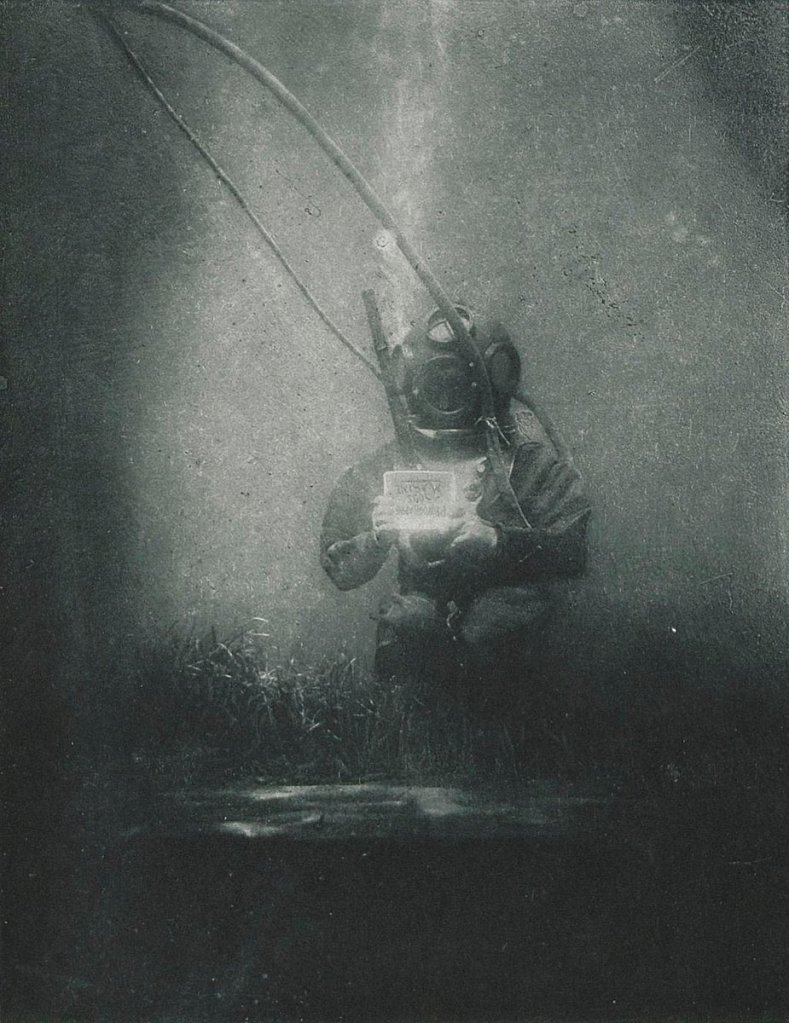
Emil Racovitza as diver at Observatoire océanologique de Banyuls-sur-Mer, 1899, picture by Louis Boutan

I remember being in a little boy and spending hours staring (at least it felt like hours), mesmerized, at the little model of an old-time diver in my parents’ fish tank — I called him, Underwater-Man. The bubbles would float up, giving the illusion that there was a little man in there, exploring the seafloor. It always reminded me of the movie 20,000 Leagues Under The Sea. I always found the outfit eerie and full of mystery. According to this article from Openculture.com, the above image is the first-ever photo of a person under the sea, taken around 1899.

Reads From The Web

20200910

Going Postal — Book review with one of the best opening paragraphs Ive ever read.  Really captured the mood of the COVID lockdown.

Bonfires of Reason — Book review of the upcoming Burning of the Books by Richard Ovenden.  Ive pre-ordered my copy.

The Sturgis Statistical Misfire — “There are three kinds of lies: lies, damned lies, and statistics.”  Phrase popularized by Mark Twain.  This Wall Street Journal OpEd exemplifies the hidden wisdom of this phrase.