
When I was happy I had many friends, when times were gray I found myself alone… – Cato
When I was happy I had many friends, when times were gray I found myself alone… – Cato

The reasonable man adapts himself to the world; the unreasonable one persists in trying to adapt the world to himself. Therefore all progress depends on the unreasonable man – George Bernard Shaw

Assessment requires more effort
He makes the assessment that requires the least effort
But effort was necessary
And he was wrong
He was wrong
Trust is the foundation of any organization or society. In a time where news, opinions, and the public are delivered with a few clicks and without context. Deepfake technology poses a sinister threat to our way of life. The In Event of Moon Disaster project by MIT is engaging and sobering. The six-minute video is excellent! But its pho-thenticity is disturbing and a warning sign of things to come.
There are excellent resources on the site for an in-depth study of Deepfake technology. Governments will need to draft sensible policies around such techniques, and news organizations will need to develop a discipline around rushing to distribute videos without verifying their authenticity.
You can visit and access all the resources of this project by going to: https://moondisaster.org/
When everything seems to be going against you, remember that the airplane takes off against the wind, not with it.– Henry Ford

I’ve always enjoyed Taleb’s use of stories for teaching a lesson. Given today is Thanksgiving, the above video is a reminder of the scores of fallacies we entertain daily with confidence.

Reward is a function of risk
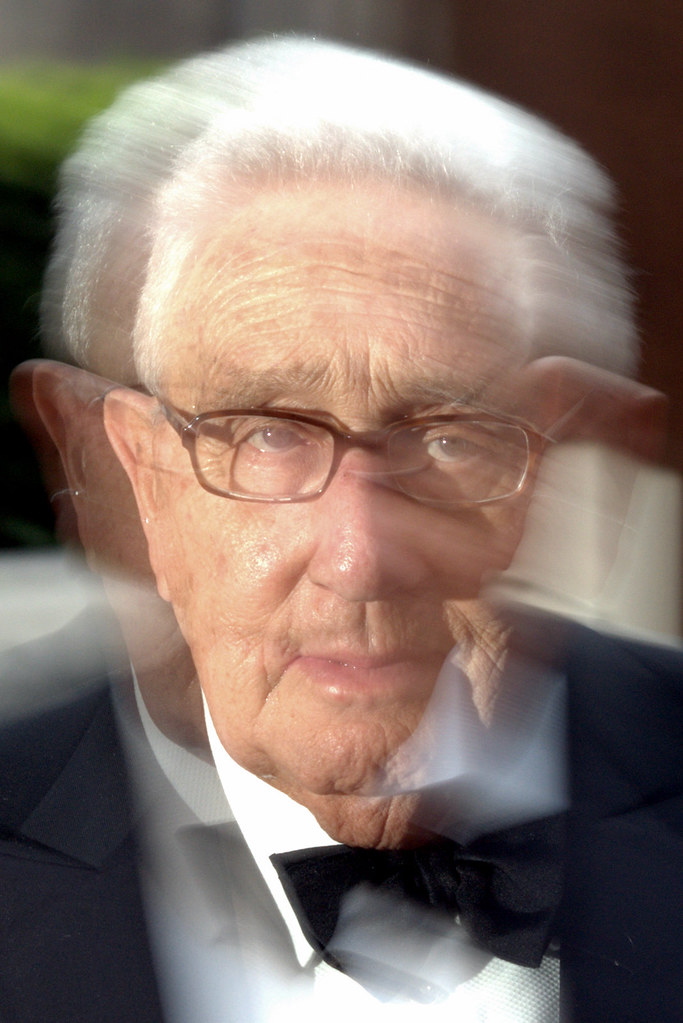
“Perhaps the deepest problem is the problem of conjecture in foreign policy. Each political leader has the choice between making the assessment which requires the least effort or making an assessment which requires more effort. If he makes the assessment that requires the least effort, then as time goes on it may turn out that he was wrong. And then he will have to pay a heavy price. If he acts on the basis of a guess, he will never be able to prove that his effort was necessary. But he may save himself a great deal of grief later on. If he acts early, he cannot know whether it was necessary. If he waits, he may be lucky or he may be unlucky. It is a terrible dilemma.” — Henry Kissinger 1963
The above quote surmises the ever-present dilemma any leader faces when making choices (or not). We grant too much agency to our leaders and neglect the role luck plays in their leadership outcomes.
This past summer, I took professor Roberto Rigobon’s MIT Executive Education course on Macroeconomics, and I found it to be a fantastic course on a broad subject. I enjoyed the material as presented by him and his engaging and charismatic teaching style. He provides excellent insights into the inner workings of the forces that shape our economies and always brings it back to the individual and our choices around our values and how they, in turn, shape and inform our choices.
In this short webinar, Rigobon discusses the importance of measuring what counts. He notes that too often, we measure outcomes and not the processes that lean to them, and as a result, we create statistics that give us a false sense of accomplishment.
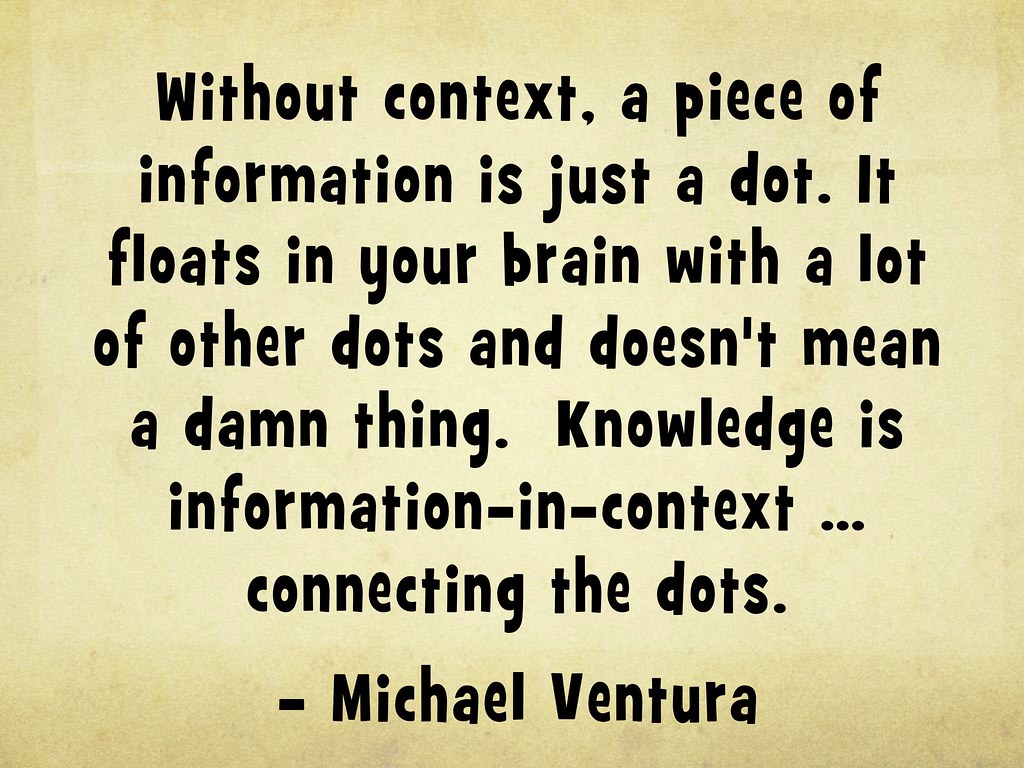
I have been thinking a lot about the importance of curated content. It just seems that with all that specialization of information, we are losing a sense of balance and context.
Our generation is obsessed with the facts. Every news organization prides itself in presenting the facts. Politicians pride themselves on being guided by facts. Yet facts alone do not equal truth. The formula for truth is:
F + C = T
Facts + Context = Truth
Curated content provides context to the information presented, be it an art exhibit or a series of news articles. And even if you disagree with those curating, it is a lot easier to understand what is being presented, knowing its context. Without context, the truth remains elusive, and the facts amount to noise.
 CYBERTONIA