The West’s outrage at Russia’s political maneuvers reeks of hypocrisy. We’re quick to point fingers at Russia for trying to sway politics in Europe, but what have we been doing for decades? NATO expansion anyone? We’ve been playing the influence game for years, openly working to undermine adversaries.
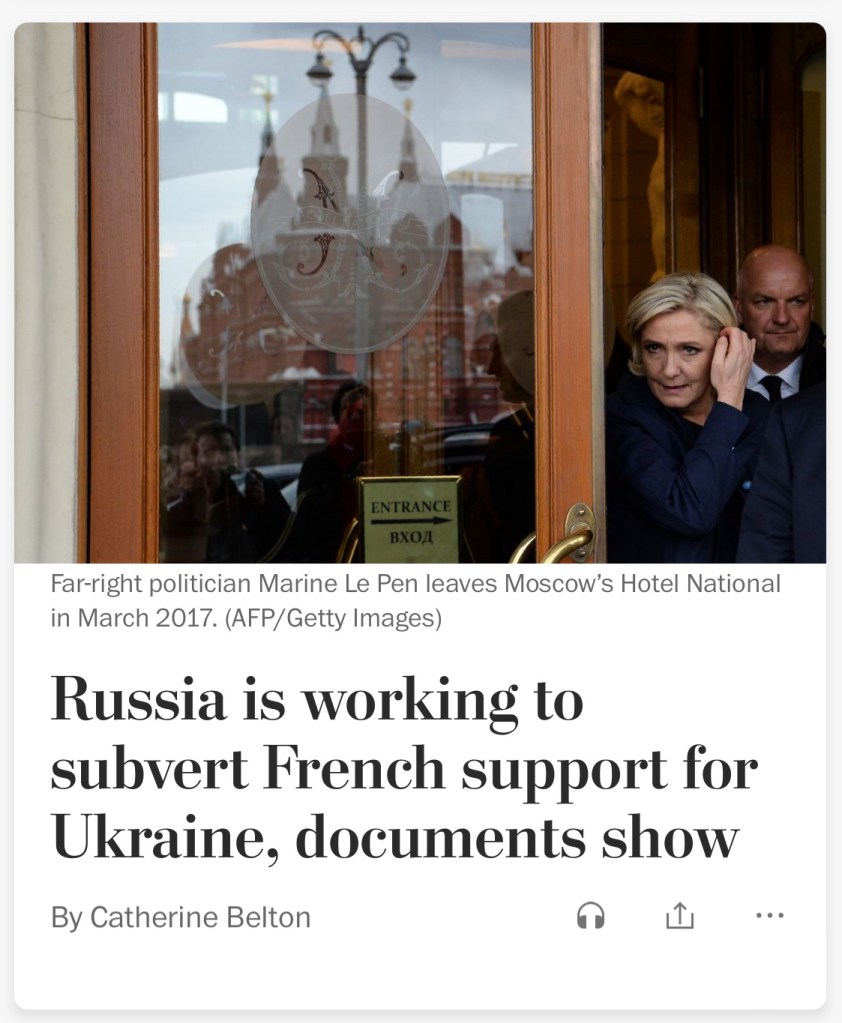
The recent revelations about Jean-Luc Schaffhauser and Russia’s alleged propaganda efforts in France are just another day in the world of global politics. We’re fooling ourselves if we think only the “bad guys” play dirty. Everyone’s trying to get the upper hand, and Russia’s response is no surprise. They’re playing the same game, by the same unwritten rules we all seem to know but pretend don’t exist.
The Western media often paints a one-sided picture, but in the grand chessboard of international relations, every move has a countermove. It’s time we recognize this universal play for power and call out the hypocrisy on all sides.
This endless war cycle has to be broken before it breaks us. I wonder if it’s too late.
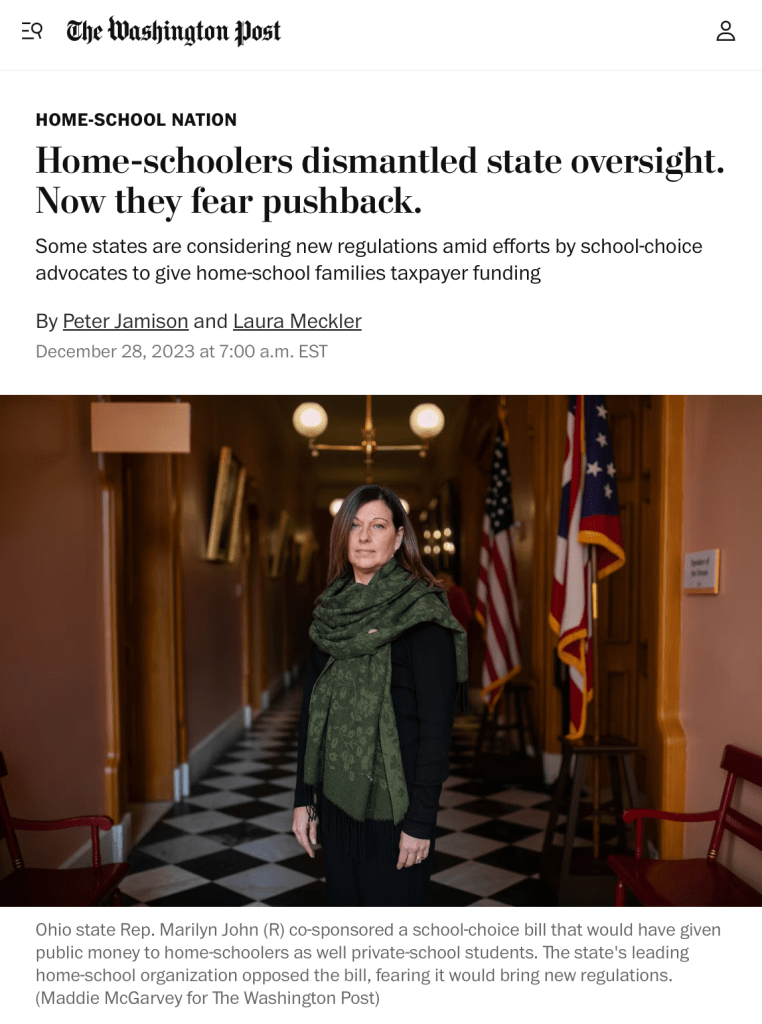
An article in today’s Washington Post titled “Home-schoolers dismantled state oversight. Now they fear pushback” covers the growing tension between homeschoolers and those opposed to it, as well as the government’s push to regulate and provide oversight. The long and short of this is simple – the state has failed miserably when it comes to our nation’s education system, and any push to regulate homeschooling is a sign of more of the same.
Our educational institutions have become centers of indoctrination of one ideology or another, with little to no true substantive educational value. Just look at some statistics on the reading proficiency of high school seniors:
According to the National Assessment of Educational Progress (NAEP), more than 60 percent of 12th grade students in the US scored below the proficient level in reading, and 27 percent scored below the basic level. This means our lowest-performing high school seniors do not even have partial mastery of grade-appropriate skills.
In 2015, only 72 percent of 12th graders performed at or above the basic achievement level in reading.
The average American reads at a 7th to 8th grade level.
These are abysmal facts, especially when you consider how much we spend on public K-12 education – $16,080 per pupil annually, for a total of $810 billion from federal, state and local governments.
Meanwhile, our school boards are more concerned about pronouns and bathroom policies than actual education. Do our kids even know what a pronoun is?
I was not a fan of homeschooling when my kids were young. But if they were elementary or middle school-aged today, I would do everything in my power to homeschool them.
The state needs to either stay out of the way of parents who care about their childrens’ education, or refocus on the basics – reading, math, actual science – not ideology or fads. Our kids deserve better than what public schools are providing today. If that means an expansion of homeschooling and independent oversight, so be it.
Nerdrotic nails it with this episode. I gave up on Star Wars when Disney took over and I am fortunate I have been spared the pain and suffering of watching them skull-fuck my childhood.
In a powerful piece, The Autism Surge: Lies, Conspiracies, and My Own Kids, in The Free Press Jill Escher discusses the alarming surge in autism diagnoses. The mother of two children with severe autism, she notes an increase of 50-fold in California over the last 33 years. Escher highlights the reality of autism’s impact, challenging the notion that it is merely a difference to be celebrated, and emphasizes the urgent need for better care and support for this vulnerable population. She criticizes the neurodiversity movement for overshadowing the severity of autism and hindering research into its origins and potential cures. Escher also refutes claims made by Robert F. Kennedy Jr. linking vaccines to autism, stating that autism is a complex brain organization disorder with its roots in early brain development abnormalities.
Despite extensive research, the causes of autism remain largely unknown, and the increasing rates continue to puzzle experts. Escher points out the lack of preparedness for the growing demand for adult autism services, urging for innovative solutions to address this impending crisis. As aging parents, who often serve as primary caregivers, won’t live forever, she stresses the need for frank discussions about the realities of autism and the enormous financial toll it imposes. Escher calls for clear-eyed views, fearless investigation of new ideas, and a shift towards meaningful subcategories within the autism spectrum to drive progress and find solutions for those affected by this serious mental disability.
Escher strongly criticizes RFK Junior in a manner similar to many others who oppose him. Their primary focus is on his perceived stance against vaccinations, but Kennedy’s actual message is quite different.
Kennedy asserts that over the past 30 years, there has been an unexplained increase in autism cases. He points out that the rise coincides with the introduction of an increased number of vaccine doses given to children. His argument suggests that prior to this 30-year period, autism cases were relatively rare. However, after the vaccine dosages were ramped up, the incidence of autism steadily rose, as noted by Escher as well.
Escher acknowledges that the cause of autism remains unknown, but she dismisses any connection to vaccines, labeling it a conspiracy theory. This dismissal raises a logical question: if we don’t know the cause, how can we confidently rule out vaccines as a factor? The truth is that we know when the increase in autism cases began, but the reason behind it remains elusive. Therefore, according to RFK Junior, it might be worth considering other changes in the environment, diet, or the introduction of artificial products, medications, etc., that occurred around the same time as the vaccine increase. By exploring a wider range of factors, we could potentially narrow down the cause of the rise in autism.
I applaud Escher for her valuable insights in other parts of the piece and I have a deep sense of empathy for the families dealing with autism struggles. However, dismissing RFK Junior’s viewpoint as mere conspiracy theories is unhelpful. Instead, encouraging open debate on the matter without fear would be more constructive. By doing so, we might gain a deeper understanding of the issue and find more effective solutions.
In General H. R. McMaster’s book,Battlegrounds: The Fight to Defend the Free World, the general notes that the Korean War, a conflict, which claimed the lives of millions and left no clear victor, serves as a poignant reminder of the grim consequences of armed conflicts. As we grapple with the potential dangers of the ongoing Russia-Ukraine conflict, it becomes crucial to examine why we selectively remember and romanticize certain lessons from history while neglecting others.
McMaster’s book brings forth the staggering human cost of the Korean War, presenting a grim account of lives lost and shattered. The numbers are harrowing: nearly 10,000 Americans, 200,000 South Korean and United Nations soldiers, 400,000 North Korean soldiers, 600,000 Chinese troops, and a devastating toll of 1.5 million civilians. The combined death toll amounts to approximately 3 million individuals, all victims of a war that ended in a stalemate, with neither side able to claim outright victory.
These figures emphasize the profound futility of war. Lives were destroyed, families torn apart, and entire communities decimated, all without achieving a decisive outcome.
The war between Russia and Ukraine threatens the stability of the region but also poses an existential threat to humanity itself. Yet, despite its potentially catastrophic consequences, it is mind-numbing to witness how this conflict fails to capture the same level of attention and concern as other global issues such as climate change or identity politics.
Perhaps it is the allure of triumphant narratives or the desire to highlight tales of heroism and resilience that helps distract us from the horrific consequences of a head-on confrontation with Russia. Ukrainian flag icons and Tweets of support allow us to outsource our decision-making to the experts. But the forgotten casualties, the shattered lives, and the irreparable damage inflicted on societies by these wars demand our attention and remembrance.
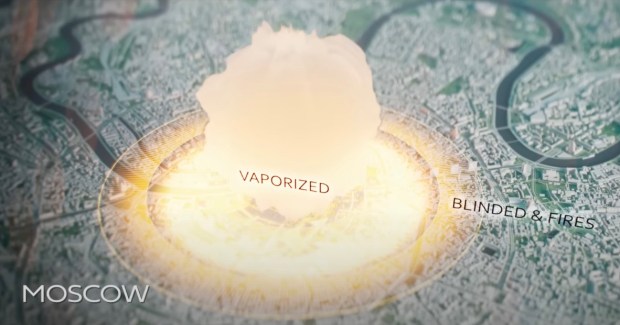
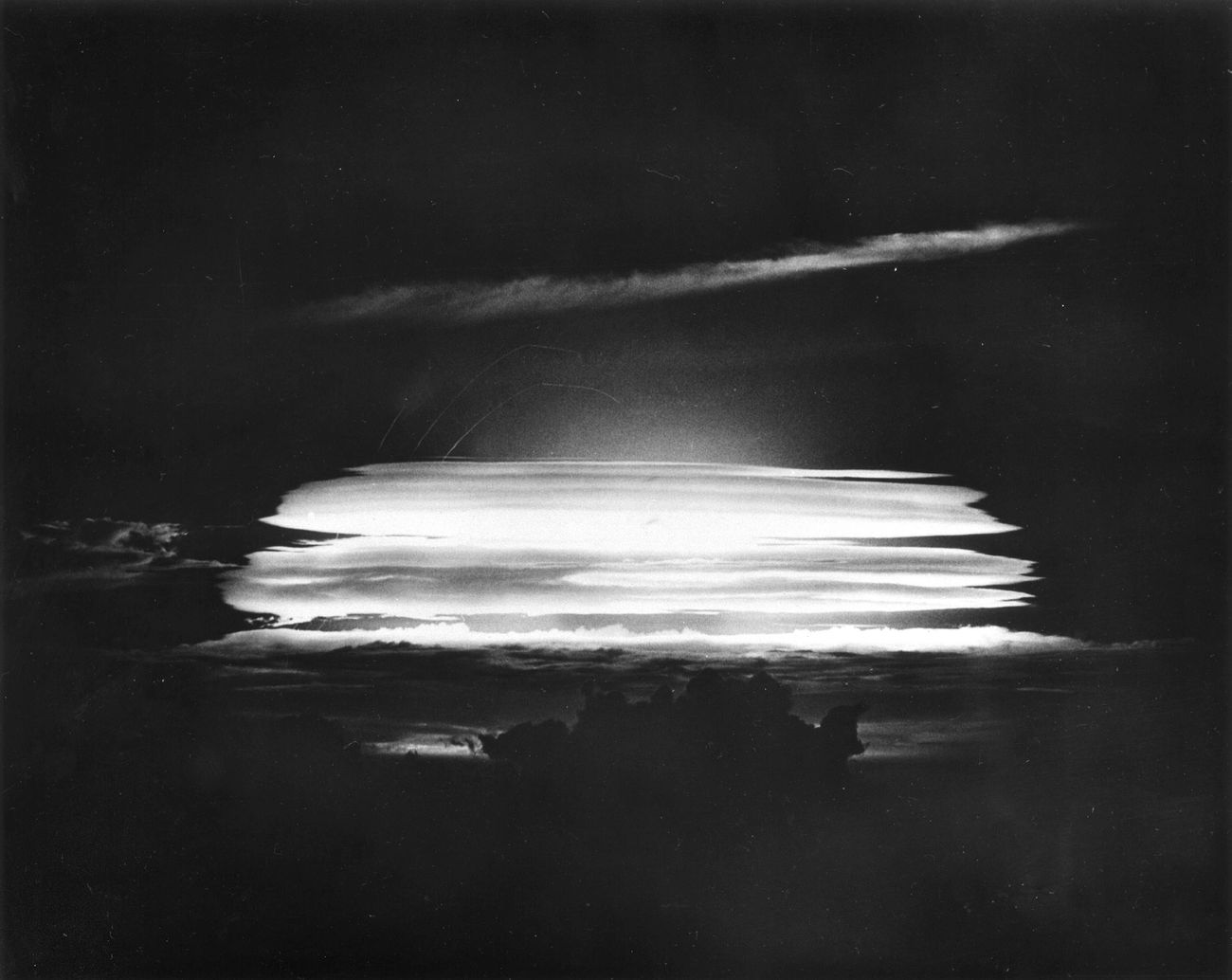
The Future of Life Institute has produced a sobering video on how a nuclear exchange between the nuclear powers – the United States and Russia – would unravel. Our news organizations should be focused on delivering this message to our populations and not on being the propaganda parrots for the foolish policies of the current administration and the US Congress’ immoral support of said policies.
Falsely accusing someone of being a Nazi is a contemptible, gutter pastime, and anyone with more than a casual acquaintance with Nazism knows how grotesque it would be to dilute the evil of the Third Reich by attributing it to someone who hasn’t earned it. —- Graeme Wood
Reading through this article from Politico where they state that millions of Americans will lose healthcare as a result of a clamp down on those that don’t need healthcare any longer, particularly those ago during the Covid era is really disturbing. I really think that when you look at the amount of money that were spending on this proxy war between Ukraine and Russia, the fact that we’re gonna have 15 million Americans – 5 million of those are children – losing healthcare is just as graceful as a country.
Personally, I’m not a big fan of big social programs, but I find it intellectually dishonest, and quite frankly offensive, that we can find money for a war that shows very little by way of being in the interest of the American people, but we can’t find that money to treat our folks with better healthcare, or better education or better programs.
Over the last few months, I have found myself grappling with the frustrations of flight delays. This week, a thought struck me, the airline industry’s predominant issue, in my observation, lies in its extensive consolidation and centralization around colossal hubs. This consolidation has resulted in a scenario where reaching most cities now requires connecting flights unless one is traveling between major urban centers. It appears that everything has been centralized, and these central hubs are a consequence of the federal government’s inclination to centralize every aspect of our lives. Centralization, despite its perceived efficiency, is far from ideal. Its vulnerability to disasters and catastrophes, coupled with the constant pressure on airlines, begs for a more decentralized approach.
Centralization is ill-suited to be resilient. Centralized systems, as many of us have experienced, are susceptible to calamities and crises.
Now contrast these centralized systems with nature. When a hurricane devastates a region or wildfires wreaks havoc, these environments have the ability to bounce back precisely because they are decentralized. Nature thrives on distributed architectures, and achieves a remarkable level of resilience.
Airlines, driven by the need to transport passengers from one place to another, are compelled to reassess their approach. Instead of relying solely on concentrated hubs, an alternative could involve a more distributed network of airports throughout the country. By doubling the number of airports and strategically spreading them across the nation, the potential for more connecting or direct flights between smaller cities and major hubs would increase significantly.
The drawbacks of centralization extend beyond the airline industry; they permeate other spheres of our lives, including politics and media. Over-centralization within politics, whether within the two major parties or the encroachment of the federal government on state and local jurisdictions, has diminished resilience. Our political system, as a result, lacks the ability to adapt and cater to the diverse range of opinions held by the majority of individuals. Furthermore, centralized media and other aspects of society contribute to the dominance of polarizing views, controlled by a minority, while the majority’s nuanced perspectives are overshadowed. Centralization proves detrimental to the robustness of our political, social, and informational landscapes.
Centralization poses significant challenges and disadvantages across various domains, including the airline industry. By acknowledging the inherent vulnerability of centralization and embracing a more distributed approach, we can foster resilience and efficiency. We need to embrace humility and learn from the wisdom found in the decentralized nature of the world around us, by designing systems that can withstand challenges — scaling and contracting as needed.
American lawmakers: If Russia launches a nuclear strike on Ukraine, it will go to war with NATO.
U.S. Senators Lindsey Graham, Republican, and Richard Blumenthal, Democrat, registered a draft bipartisan resolution in the Senate declaring Russia's use of nuclear weapons in… pic.twitter.com/GoCVlOTYex
Climate activists like those in this post lose all credibility with their misplaced sense of urgency when in they overlook the threat of nuclear war the world is facing with the US proxy war with Ukraine and Russia.
German climate activists throw black paint over a public art work celebrating human rights, made by an Israeli artist. The symbolism is perfect: angry, ungrateful, and fanatical elites destroy a monument to civilization, freedom, & forgiveness.pic.twitter.com/YbZZexUZct
— Michael Shellenberger (@shellenberger) March 4, 2023





 CYBERTONIA