“Journalism Notebook” by planeta is licensed under CC BY-SA 2.0.
I finally got to listen to The Free Press podcast of, The Witch Trials of J.K. Rowling. As of the writing of this post, the most recent episode is chapter 3– embedded in this post. I started to listen to chapter 1 thinking I would listen for about 20 min and pick up later and 3 hours later I am here posting about it because I wanted to note how impressive it is so far.
The series is written and narrated by Megan Phelps-Roper, whose own story is of interest on its own. But what she and her team have managed to produce in just three hours of podcasting is nothing more the first-rate, long-form journalism.
Not going to spend any time reviewing this work since it is not done. Just wanted to note that this is serious work for anyone that is a free thinker.
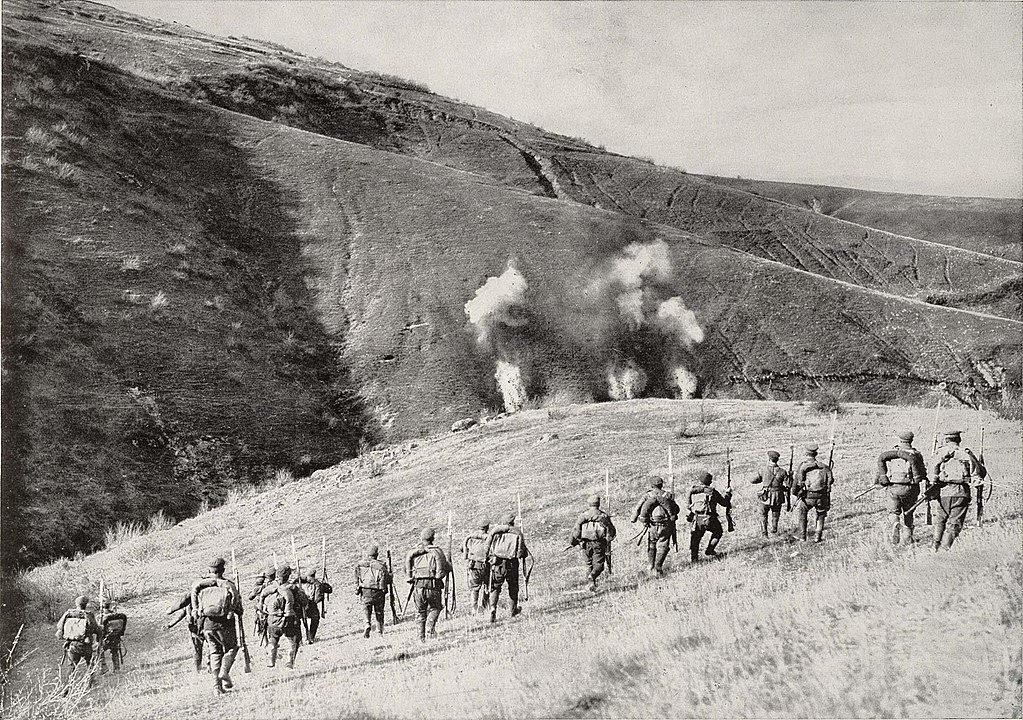
I’m finding it hard to accept we are not ambling into a major nuclear conflict. Putin’s belligerence must be addressed, but the hubris of the west is equally irresponsible. I don’t have any answers but I know history has many lessons that our leaders seem to keep ignoring. Too many references to World War II and Hitler by the pundits and too little reflection on the Great War that led to WWII.
David Remnick’s, The Defiance of Salman Rushdie – The New Yorker, February 6, 2023 – is a masterful piece on the cowardly attack on the famed author of the Satanic Verses. The profile essay covers Rushdie’s humble beginnings and his defiant choice of living an open life in the face of a Fatwa for decades, and the fateful moments where his courage to live came head-on with the cowardice of a weakminded ideolog — almost costing him his life.
The attack is a reminder that free speech is not a motto but a way of life. We cannot allow laziness to hide behind offended feelings. We must sharpen our intellect for battling bad ideas.
If you don’t know where you’re going any road will take you there
Boy George
In 1986 I was sixteen years old, and my future was settled. As soon as I graduated from high school, I was going get a job at UPS or FedEx, the benefits were solid, and I would work there for 20 years and then retire. One October morning John Jaques, my history teacher at City-As-School, asked me to write an essay about growing up in New York. I don’t remember anything about what I wrote, but I do remember knocking it out over lunch and handing it to him before I headed out to work at Ben & Jerry’s on sixth avenue and 4th street. Two days later, John informed me that he had entered my essay in a school competition, and I was one of four students selected as a winner, and I was heading to West Berlin, Germany.
America likes to romanticize its immigrant communities. The hard-working pull themselves up from the bootstraps theme is constantly reinforced with stories about a person who came to America with only a dollar in their pocket, and now they are worth billions. The truth is that for every outlier story, there are thousands whose every tomorrow sees the sun setting earlier on their hopes of getting out of the ghetto. For new immigrants, their hopes hang on longer. Their memories of a world before the ghetto make it harder for the rust of despair to build in them. For those born in the ghetto, the rust builds on fast and early. You don’t see a world outside the ghetto because you are the ghetto.
I arrived in West Berlin on a cold November morning in 1986. The German family I was staying with greeted my schoolmates and me at the Tempelhof Airport. After some introductions, we got my bags and were off to their 13-room apartment in the center of town. The family was wealthy and extremely pleasant. I was a complete curiosity to them, and I did not mind. I found them curious myself. Back in 1986, a kid from Brooklyn’s most extensive knowledge of Germans was goose-stepping Nazis from PBS’ World at War. I was Jane Goodall, and West Berlin was my Tanzania.
My time in Berlin was short, and conversations were limited because I couldn’t speak German, and the family I was with had a limited grasp of English. But the impact of the experience was exponential. For the first time in my life, I was not the ghetto; I was George. I could see beyond the limitations imposed on me. Nothing material was told to me. Nothing material was given to me. But I experienced a world of what was possible. When I came back home, back to the ghetto, I no longer wanted to be a driver for anyone but myself. I had no idea where I was going, but I knew that any road I took would take me there.
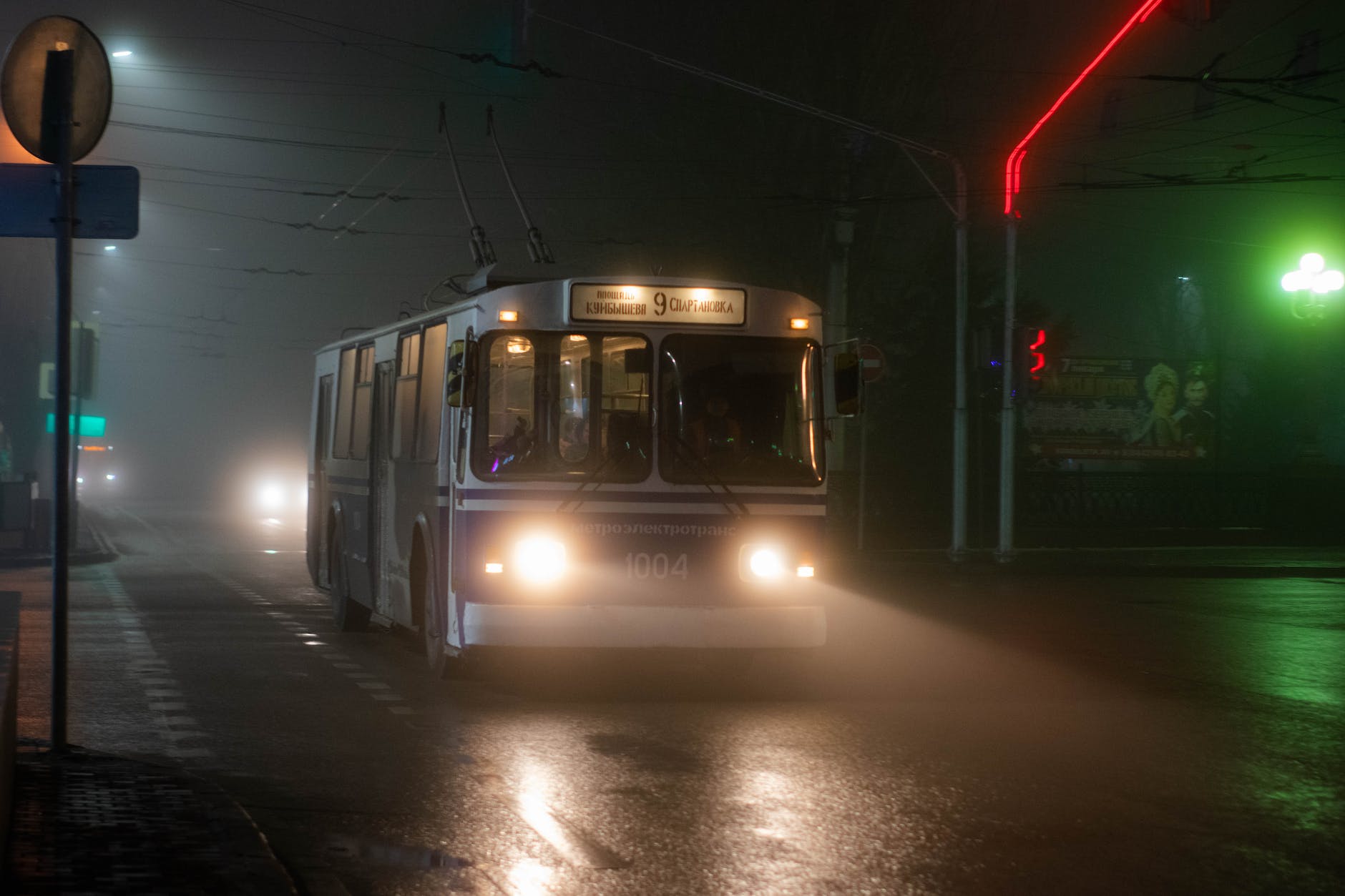
Photo by u0422u0430u043cu0430u0440u0430 u041bu0435u0432u0447u0435u043du043au043e on Pexels.com
The quiet bus pulled into the front of the church at south 3rd street and Driggs avenue in Williamsburg, Brooklyn, around 11 pm. And like on so many church trips before, a sense of sadness swelled in my young chest. Those trips for me were the closest I had to feeling a sense of being in a loving, caring community. Arriving back home in Brooklyn reminded me of the world always waiting for me, a world of a depressed mother, the memory of a deceased father, and an insecure community tearing at itself with violence.
Every summer, the First Spanish Presbyterian Church of Brooklyn, NY, organized a series of weekend-long trips for its members. This was designed for the older folks on a budget. It was a great way to keep many of the members engaged during the dog days of summer and raise a little money for the church so they could have activities for the fall and summer. My grandmother, on my father’s side, was a member of the church. And she had joined it when she moved to New York City from Puerto Rico back in 1961 with my Aunt, Clara, and a 9-year-old boy name Jorge, my dad.
For the years of my life between 10 and 13, I anticipated the month of April, not because of my birthday or the Easter holiday break, but because the church would announce what the planned summer trips would be, and my grandmother and my aunt Clara would start discussing which trips they would book.
I remember the excitement and fondness faded a bit as I grew older. The cruelty of becoming a teen is that those you admire become brittle, weak, and less fun, while your insecurities get amplified and the world around you becomes crueler.
Once on the bus, I would lose myself in daydreams staring out the windows at the seemingly endless roads to so many places outside New York. I especially loved when we would hit the countryside, and I would see real-life barns. I always remember the barns.
On every trip back, there was always a moment, usually when we were about 2 hours outside New York. Everyone was tired and looking forward to getting back home. Someone would ask Lydia Ortiz to sing En Mi Viejo San Juan. It is an old song of the Puerto Rican diaspora whose chorus repeats, “I leave, now I leave. But one day, I will return to my old San Juan.” The song ends with the person never being able to go back to their homeland and dying in a “strange nation.” Lydia’s voice was beautiful, and by the end, it would crack as she started to cry. And many on the bus would join her in tears.



 CYBERTONIA