“Wherever they burn books, they will also, in the end, burn human beings.”
Heinrich Heine
I still remember the confused and scared emotions when I first saw the images of books burning. It was an old World War II documentary back in the late 70s, early 80s. The date fails me, but I remember it was not long after my dad had died. My mother dealt with the depression of her husband’s loss with an addiction to valium.
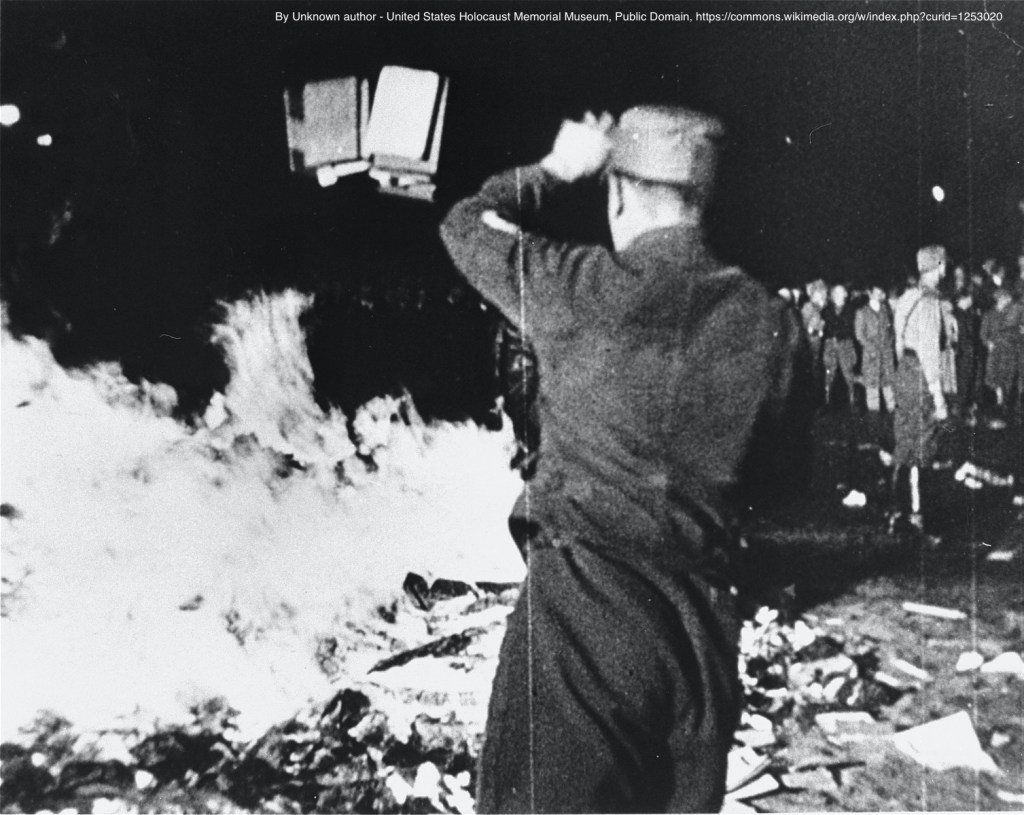
Initially, books were a liberation for me from the fears and pains of the world I had been thrust into by my father’s unexpected death. I found refuge in the adventures of heroes like Conan the Barbarian, a loner who, through his brawn and smarts as a thief, made his way in an unforgiving, violent world. I also found wonder in sci-fi stories by Asimov and Clarke. I was moved by Shelly’s version of Frankenstein, which to my young minds surprise, was very different from the movies I had grown up watching. So it was with a sense of horror that I watched Nazis burning books on a pile. Why would anyone do such a thing?
Over the years, I learned that book burning was not a Nazi phenomenon but a weapon used by those seeking to control people’s minds. Ray Bradbury’s Fahrenheit 451 came into my life during my teens. It brought the whole subject into context, helping me frame lifelong values around all forms of censorship. Censorship is the first sign of tyranny, a signpost to sound the alarm.
When you burn books, you are attempting to exterminate ideas. And when you have no more books to burn, the only repository of ideas left are minds.
I find book-burning, for any reason, repulsive, and I consider it a crime against humanity. Humanity would be nothing without ideas. Our culture, our traditions, the very essence of what makes us humans comes from our thoughts. Books are mediums that document ideas, good or bad. And they serve as a testament to where we have been and where we can go. They help to inspire and to warn.
During the summer of 2013, while on a business trip to Berlin Germany, I found time to visit the site of the book burnings of 1933. There is a memorial there, a room with empty bookshelves. The moments I was there brought me full circle to that moment so many years ago when I was a kid.

Jackasses from every corner of the political spectrum will argue that banning books is for the good of this or that group. They will claim that it’s not all books, just the ones that “shouldn’t be.” Fear these people and do not trust their intentions; they are never good. Anyone that seeks to erase ideas will rewrite histories and have no restraint from erasing people.
 CYBERTONIA